
The right care is crucial
Every animal needs individual care. Many animal lovers find this a challenge, but there's no need to worry. Proper care is easy when you know what to do. Just ask us. We shall be happy to advise you.
This section of the web site includes advice on some of the issues that you may face with your dog.
At Clearly Canine we use a range of techniques to bring your dog and you together to create a happier environment for both of you. We explain to you the route of your dog’s behaviour and work with you to find solutions to correct it. Often we find that dogs are stressed and when we do we can use alternative therapies such as Reiki, Crystal Healing and massage to bring about amazing changes.
Food aggression
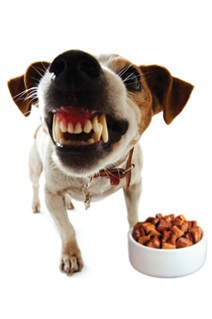
If your dog is showing signs of food aggression it is important to act quickly however young they are and even when it seam funny. I teach my dogs as soon as they get home that food is to be shared it’s not theirs it is put down for them to eat but I own it and the plate it is served on.
When I get a young puppy I start straight away making it sit before it is allowed to have it’s food. It takes a while at first but by holding the dish directly above the dog’s head it tends to put its bum down to make itself taller to get the food. I say sit as it’s bum goes down followed by the provision of the food. This works for a while, however as the dog gets older it is necessary to increase the training to sit and wait for his food. Giving in at this stage can be a recipe for disaster.
At this early stage I also add and take away food from the bowl. Lift it part way through giving the dog lots of praise when it allows me to do this.
Dealing with an older dog that shows food aggression either to people or other animals can present a problem. One method I have used is to hold the bowl and feed the dog little pieces at a time praising the dog for his patience.
Another method is to make the dog sit and wait for his food if he shows any sign of aggression whilst eating remove the food without getting bitten. (Use a broom handle to pull the bowl towards you but don’t hurt or frighten the dog.) Make sure that you praise your dog for giving up his bowl, give him a special treat like chicken or minced meat. Once you have done this start the sit process again. Ask you dog to sit and offer him his food bowl. Repeat as many times as necessary.
For more advice on food aggression contact me via this web site.
Socialisation – Choosing your puppy and its first days with you
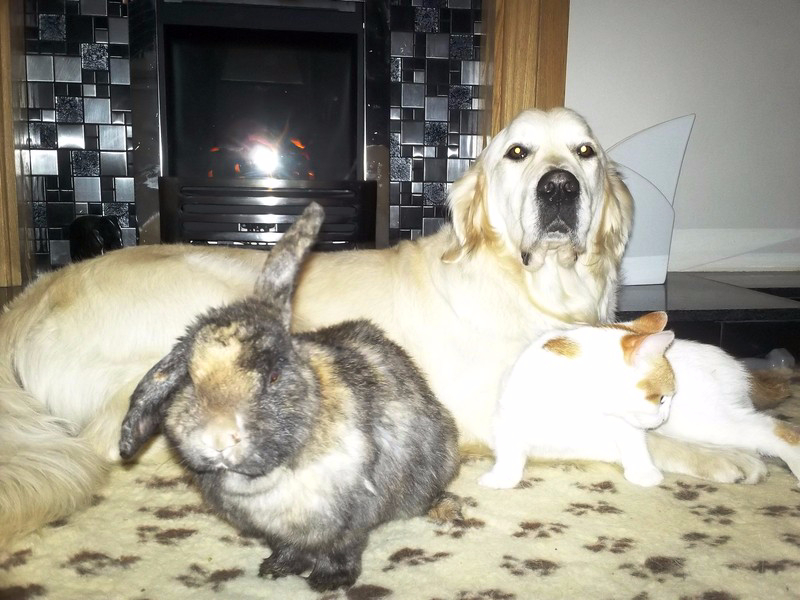
Dogs and cats are genetically programmed not to get on; that is unless they are socialised at a young age.
The optimum time to socialise your puppy is up to 12 weeks. After this time it is still possible to teach your puppy to accept new things, however it takes longer and you will have to spend more time introducing your puppy or older dog to the world around them.
It is important when purchasing a puppy that you ensure that it comes from a breeder that has begun its socialisation process. The most efficient way to do this is by raising the young puppy inside the family home whilst in an area where it is safe from young children and general household dangers.
A well-adjusted puppy will feel confident around household appliances when you visit to view the puppies. Make sure that you view the mum as not seeing her may suggest that she has been over bred, under socialised or not a good specimen of her breed. The state of the mum is also relevant as she will pass on both her genes and her state of mind to her puppies.
If you have a view of the type of puppy that you want speak to the breeder. A good breeder will be able to help you choose the right puppy for you out of the litter. This is not a reflection on socialisation rather on the individual personality of the litter mate. It is possible to start to establish this from about five weeks of age.
Once chosen and living with you, you have taken on a great responsibility and it is up to you how your animal develops from the well-adjusted puppy you have sought into a confident adult who is a pleasure to be with.
Be diligent at this phase of your new dog’s life and ensure socialisation takes place whatever the circumstances. On one occasion when my dog was late with her injections due to ill health I carried her in a baby sling to ensure she didn’t miss this period of socialisation.
I suggest that you write a comprehensive list of all of the things that you need to introduce your puppy to. Children, men, men with beards, women with heals, the post man, milk man, make greeting people at the door fun and certainly acceptable. This will save later retraining to stop door barking.
Outside the home, visit the park, busy streets, meet as many other dogs as possible. Your puppy’s vaccinations should be completed as soon as possible and recall should be next on the list. Once completed visit the local dog park and let your puppy run free with the other well socialised dogs. Before 5 months teaching recall is much easier as your puppy will want to come back to you. Sooner is always better!
Feeding your dog
Diet and exercise is pushed to us as humans through adverts and TV programmes every day. We either choose a healthy life style or don't. I am a swinger... that is I swing from healthy to unhealthy eating; I like my takeaways and bacon butties with butter and sauce. I know I feel better when my diet is healthy, but I slip at times.
When it comes to my dogs they don't have a choice. I provide their food and they are at the effect of how that provides the nutrition that they need. This in turn effects how they feel. Before I studied to be a dog psychologist I would purchase what I thought was ok for my dog. I didn't even think about the need for their diet to be healthy like mine.
What I learned was that by buying a cheaper food that I may be increasing my vet bills and reducing the wellbeing of my dog. Once I started to read the labels I was amazed to see the difference in product and the amount required to feed my large retrievers. Some are full of 'E' numbers and sugar. Having tried them on my dogs I saw a visible difference in their behaviour just like we see in children. I now choose a healthy food for my dogs.
Not being able to buy the best food should not be a reason not to have a dog however just like a leading washing up liquid it is sensible to buy the best that you can afford. Look at the label for foods that have a high protein content that comes from meat rather than cereal. I use Healthy Options which is a natural and well balanced as it gets. Visit their web site to compare prices to your regular dog food. Don't forget to look at the amount to be fed as often the amount of food required is less in a better dog food.
http://www.healthyoptionpetfood.com/
Chewing
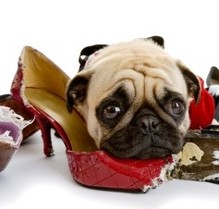
I came home after a busy day to find my new boot chewed up by my 17 week old puppy. Oh NOo!!! What had I done to deserve this!**^~~~# How could I stop my puppy from doing it again? Should I shout at her, hit her with the boot!
In fact hitting her with might be seen as a reward, worse she would become afraid of me and the bond between us damaged. If I shout at her she will not connect it with what she has done as dogs live in the moment. This may make her worried when I leave her and make her more likely to chew next time I am out.
What did I do? Just pick up the boot and its partner and put them to one side. The problem was mine, as I did not follow my own golden rule. No shoes left out on the floor especially if the dogs are left alone for a long period.
The trick is to provide her with lots of things to occupy her. My mistake on this occasion was to not follow my own training rules which are:
- Not feed her from her bowl but use a feeding ball.
- Leave a chew toy such as a Cong stuffed with treats.
- Remove all chewable items from the room.
- Alternatively you could crate train your puppy.
Home alone
When we humanise our dogs we often do exactly the opposite of what is necessary to deal with a particular behaviour in our dogs. One issue that I am asked about is home alone boredom, when feeling alone, stressed or board and dog can get up to many things. Barking is one that can cause additional problems by upsetting neighbours. Home alone stress can also lead to destructive behaviours which I will deal with in next month’s Blog but for now let’s focus on what to do to reduce your dog’s stress when you leave the house.
It is important to first of all remember that the dog does not remember when you got stuck on the motorway for four hours and he was alone for hours and hours. You dog lives in the now. He also does not speak English so reassuring him will not work either. The thing to do is to practice leaving the house as a no deal issue. That is do not look at your dog speak to him try to reassure him in any way. When you return again ignore your dog. Have a cup of tea and then say hello. Going and returning are no big thing.
If your dog get upset as you are in the process of leaving then make this process one that does not always mean you a to leave. Put on your coat collect the car keys and then sit down and have a cup of coffee all the time ignore your dog. Alternatively do the same go out and come straight back in do it a few times till your dog gets bored. Then either leave or get on with your day as though it never happened.
At Clearly Canine we use a range of techniques to bring your dog and you together to create a happier environment for both of you. We explain to you the route of your dog’s behaviour and work with you to find solutions to correct it. Often we find that dogs are stressed and when we do we use alternative therapies such as Reiki, Crystal Healing and massage to bring about amazing changes.
Lead aggression
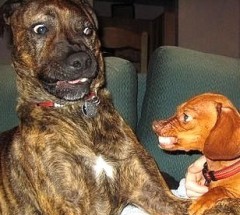
This week I was asked to visit a small staffy cross dog with lead aggression. The dog was very happy to live at home with his owner and family cat and showed no aggression about food or toys. As a puppy when he when he met dogs showed fear and hid behind his owner who picked him up and comforted him, however as he grew older he became aggressive growling and snarling at other dogs when he was on his lead. His owner had reduced the time he spent with other dogs and the problem had escalated. The dog is showing fear aggression and comforting him rewards him for this unwanted behaviour.
On questioning the new owner I was told that the dog had not been socialised as a puppy being kept mainly in the house and garden. When a dog is not socialised preferably before they are 12 weeks old they can be fearful of the things that they come across in everyday life. Although it may be more difficult to socialise a dog after this time it is possible. Lead aggression is generally a sign of a lack of this early socialisation.
I advised the owner to start slowly and there are a couple of ways to stop the behaviour. One is to socialise the dog to other dogs. Don’t pull them backward when they show aggression, this raises their shoulders and makes them appear more aggressive to the other dog which may cause a counter attack. Before the encounter turn and walk in the other direction and distract your dog. I recommend doing this with the help of a squeaky toy. Introduce you dog to the toy indoors make it an object of intrigue. Never let you dog play with it and use it as a distraction technique and reward your dog with a treat when it turns to the toy instead of an approaching dog. Never sympathise with your dog.
The second thing necessary to alter this behaviour is to introduce the dog to as many other dogs as possible. Let him smell them and them smell him. Ask friends with friendly dogs to meet up for play dates when confident in these areas move on to a friendly dog park. If the dogs recall is poor, use an extendable lead and let the dog have as much freedom to mingle with the other dogs as possible. Be patient it may take time, but by perseverance daily walks will be much more pleasurable both for dog and owner. We provide expert guidance to guide you through these steps.


 Print
Print 